New Address: 897 N MacArthur Blvd, Ste 120, Coppell TX 75019

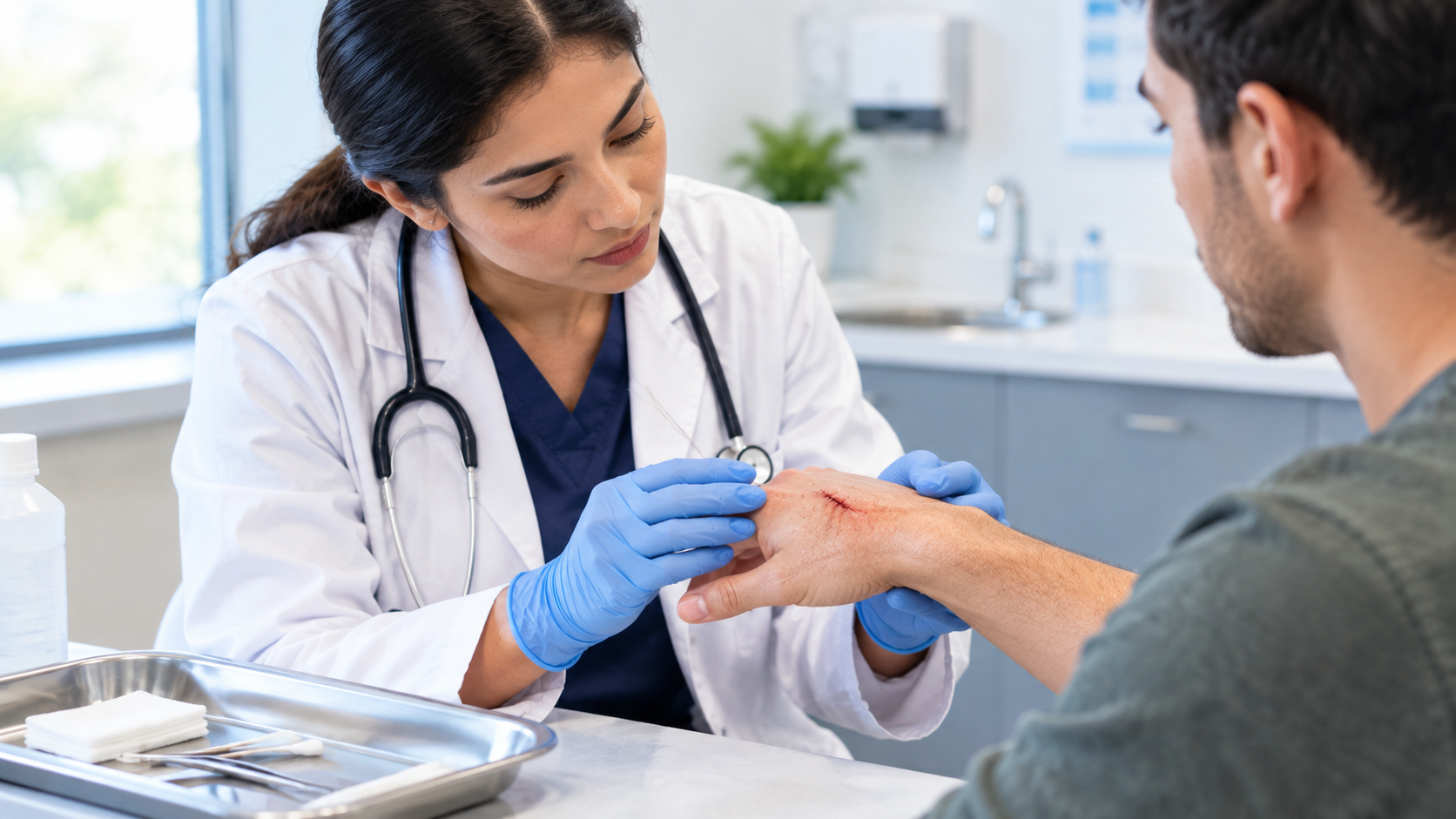



A common mistake with cuts is judging the injury by how it looks on the surface. A small opening can extend deeper than expected, while a longer cut may only involve the top layers of skin. Bleeding that stops does not necessarily mean the wound is minor.
What matters is the depth of the injury, whether the edges come together, where the cut is located, and whether there is damage to underlying tissue. These details help determine if a wound can heal with routine first aid or needs stitches or another form of closure.
There isn't one measurement that determines whether a wound needs closure. Healthcare providers consider the wound's depth, length, location, appearance, cause, and how well the edges come together.
You should have a cut evaluated promptly if:
A wound does not necessarily need stitches just because it looks dramatic. Likewise, a relatively small cut can still require medical attention if it affects an important area or deeper tissue.
Depth matters, but it is not the only factor. Cuts that expose yellow fat, muscle, or deeper tissue should be evaluated by a healthcare professional.
As a general guide, cuts about ¼ to ½ inch deep or deeper, or longer than ¾ inch, may need closure, especially if the edges do not come together. However, a short, deep cut can be more serious than a longer, shallow one.
If you cannot tell how deep the wound is, have it checked. A healthcare professional can determine whether stitches, adhesive, Steri-Strips, or basic wound care is appropriate.
Still asking, “Does my cut need stitches?” Run through this quick checklist:
Is the wound still bleeding after 5 to 10 minutes of firm, direct pressure?
→ Get it evaluated.
Do the edges gape open or fail to stay together?
→ It may need closure.
Is the cut deep enough that you can see fat or deeper tissue?
→ Seek medical evaluation.
Is it on your face, hand, over a joint, or another area that moves frequently?
→ Have it checked.
Do you have numbness, tingling, weakness, or difficulty moving the area?
→ Seek prompt medical attention.
Is there dirt, glass, metal, or another object stuck in the wound?
→ Do not try to dig it out. Get medical care.
There is a limited window in which stitches are generally most useful. In many cases, wound closure is considered within about 6 to 8 hours after an injury, although the appropriate timing varies depending on the location, type, contamination, and individual circumstances. Some wounds, particularly on the face, may be candidates for closure later than this.
For that reason, don't wait until tomorrow to see if a concerning wound "closes on its own." Same-day evaluation is usually the better approach when a cut may need closure.
If you have a wound that may require deep cut treatment, focus on controlling bleeding and protecting the area while arranging medical care.
Use clean gauze or a clean cloth and press firmly against the wound. Maintain continuous pressure rather than repeatedly lifting the cloth to see if the bleeding has stopped.
If possible, raise the injured area above the level of your heart while continuing to apply pressure. This may help reduce bleeding.
If glass, metal, a splinter, or another object is deeply embedded in the wound, do not pull it out yourself. Removing it could cause additional bleeding or tissue damage. Instead, stabilize the object as best you can and seek medical attention.
For a minor wound with manageable bleeding, gently rinsing it with clean running water can help remove surface dirt. Avoid aggressively scrubbing a deep or heavily bleeding wound.
Place clean gauze or a dressing over the injury while you arrange care. Avoid applying substances directly into a deep wound unless a healthcare professional recommends them.
Heavy, spurting, or uncontrollable bleeding requires emergency care. Call 911 or go to the nearest emergency department.
You should also seek emergency care for a severe injury involving significant tissue damage, loss of function, or symptoms suggesting serious nerve, tendon, or blood vessel injury.
A Band-Aid works well for many small, superficial cuts. But if a wound needs closure and you simply cover it with a bandage, the skin may heal with the edges pulled apart.
That can contribute to:
Stitches bring the edges of a wound together and help stabilize the tissue while it heals. Depending on the wound, a healthcare professional may instead recommend medical adhesive or Steri-Strips, particularly for smaller, less complicated cuts.
Deep, dirty, or contaminated wounds can also raise questions about your tetanus protection. Depending on the type of injury and when you last received a tetanus-containing vaccine, you may need a booster.
If you are unsure when your last tetanus shot was, mention it when you seek care. A healthcare professional can determine whether additional protection is recommended.
Most cuts heal fine with basic first aid. But a wound that's deep, gaping, won't stop bleeding, numb, or came from something dirty is one worth getting evaluated rather than watched.
Apex Primary Wellness offers same-day wound evaluation, so a cut on the borderline gets an accurate assessment and the right closure method, whether that's stitches, adhesive, or simple reassurance that a bandage will do.
Request an Appointment to get it looked at before it turns into a bigger problem. Some deep cuts heal without stitches, but a healthcare professional should assess whether they need closure, cleaning, tetanus protection, or deeper-tissue evaluation. Stitches work best within 6–8 hours, though timing varies by wound location, depth, contamination, and cause, so seek care promptly. Any cut can scar, but proper cleaning and closure may improve healing and reduce the scar’s appearance. Urgent care or primary care can treat many cuts, while severe bleeding, tissue damage, or suspected nerve, tendon, or blood-vessel injuries require the ER. Worsening redness, swelling, pain, warmth, pus, red streaks, or fever may indicate infection and require medical evaluation.Frequently Asked Questions (FAQs)