Notice: Coppell Office Moving Soon | New Address: 897 N MacArthur Blvd, Ste 120, Coppell TX 75019

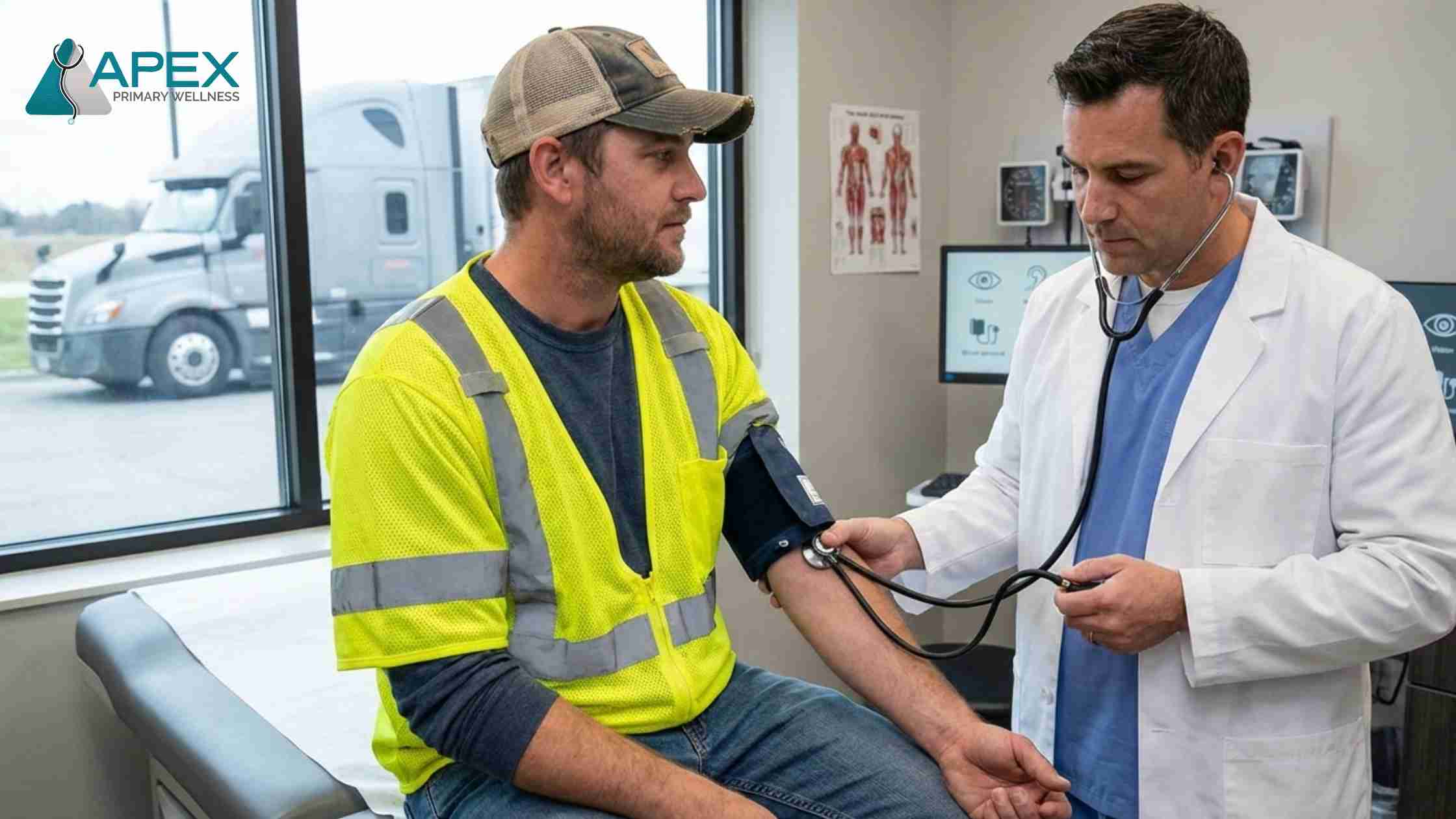
For commercial drivers, the DOT physical exam is required to stay on the road legally and safely. Mandated by the Federal Motor Carrier Safety Administration (FMCSA), this exam ensures that drivers are physically and medically qualified to operate commercial motor vehicles. While the exam itself is straightforward, many drivers feel anxious before their appointment, especially if they have concerns about blood pressure, vision, sleep apnea, or existing medical conditions.
The reality is that most issues can be avoided with proper preparation. Understanding what the exam involves, what medical examiners look for, and how to prepare ahead of time can make the process smooth and stress-free.
Let’s explore everything you need to know, from Dot medical requirements to what happens after you pass the exam
A DOT physical exam is a medical evaluation designed to determine whether a driver can safely perform the duties required to operate a commercial vehicle. The goal is not to disqualify drivers, but to reduce road safety risks by identifying medical conditions that could interfere with safe driving.
You are required to take a DOT physical exam if you:
Most drivers are required to take the exam every 24 months. However, drivers with certain medical conditions may receive a shorter certification period, such as one year or even three months, until the condition is under control.
Failing to complete your DOT physical on time can lead to:
Staying compliant protects both your career and public safety.
The exam must be performed by a Certified Medical Examiner (CME) listed on the FMCSA National Registry. These professionals are specifically trained to evaluate commercial drivers in accordance with DOT regulations.
Choosing a certified examiner matters because they understand:
The examiner assesses your overall physical and mental fitness for commercial driving. This includes:
The goal is to ensure you can safely handle long hours, heavy vehicles, and high-responsibility driving situations.
Drivers must meet minimum vision requirements to ensure the safe operation of a commercial vehicle:
Failure to meet these standards without correction may result in disqualification.
You must be able to hear:
Hearing aids are allowed and should be worn during the exam if needed.
Blood pressure is one of the most common areas of concern:
Managing blood pressure in advance is critical to passing the exam.
Drivers with diabetes are evaluated based on how the condition is managed:
Medical examiners watch for signs of sleep apnea, including:
Drivers diagnosed with sleep apnea may be required to provide CPAP compliance reports showing regular use.
Arriving with the proper paperwork can prevent delays or repeat visits. Be sure to bring:
Incomplete or missing documents are a common reason drivers are asked to return for a second appointment.
Simple lifestyle changes in the days leading up to your exam can make a difference:
Always take medications exactly as prescribed:
Skipping medication can cause abnormal readings during the exam.
Good sleep supports healthy blood pressure, alertness, and accurate test results. This is especially important for drivers with sleep apnea or fatigue-related concerns.
Many failures are preventable. Common issues include:
Being honest with your examiner and preparing in advance significantly improves your chances of passing.
Once you pass, the examiner issues a Medical Examiner’s Certificate (MEC).
Follow-up exams may be required for:
These follow-ups help ensure ongoing safety and compliance.
Yes, drivers are allowed to retake the exam after addressing the issue that caused the failure.
Correcting the underlying issue is essential before retesting.
A DOT physical exam is an essential step in maintaining your ability to drive commercially. With the proper preparation and documentation, most drivers complete the exam without difficulty. Scheduling your exam early allows time to address any concerns and helps prevent last-minute surprises that could affect your work.
At Apex Primary Wellness, our team understands the needs of commercial drivers and focuses on providing a smooth, professional exam experience. We are here to help you stay compliant with DOT regulations and avoid unnecessary interruptions.
If your DOT medical certificate is coming due, contact us today to schedule your exam and stay road-ready.FAQs
Yes. You can take a DOT physical without a CDL if you plan to operate a commercial vehicle and must meet DOT medical standards.Yes. Caffeine can temporarily increase blood pressure and heart rate, which may affect your exam results.If it expires, you may be legally prohibited from driving until you complete a new exam and receive certification.Yes. Many drivers choose to renew early to avoid gaps in certification.No. Fasting is not required. Eating a balanced, low-sodium meal before your exam is recommended.