New Address: 897 N MacArthur Blvd, Ste 120, Coppell TX 75019




You pull your hand back from the stove, hold it under the tap, and stare at the skin. Is this a bandage situation or a doctor situation?
The fastest tell is blistering. Dry, red skin with no blisters usually means a first-degree burn. Deep red or dark, wet-looking skin with blisters usually means a second-degree burn. The difference matters because it changes what you can safely handle at home and when a professional should take a look.
Blistering is the biggest single differentiator. First-degree burns do not blister, and second-degree burns do.
First Degree | Second Degree | |
Skin layers affected | Outer layer only | Outer layer plus part of the layer beneath it |
Appearance | Red or reddish-brown, dry | Deep red to dark brown, moist or shiny |
Blisters | No | Yes |
Pain | Painful, tender | Often more intense |
Healing time | About 7 to 14 days | About 1 to 3 weeks |
Scarring | Rare | Possible |
A mild sunburn is a common first-degree example. A splash of hot oil or a hot pan handle often causes a second-degree burn.
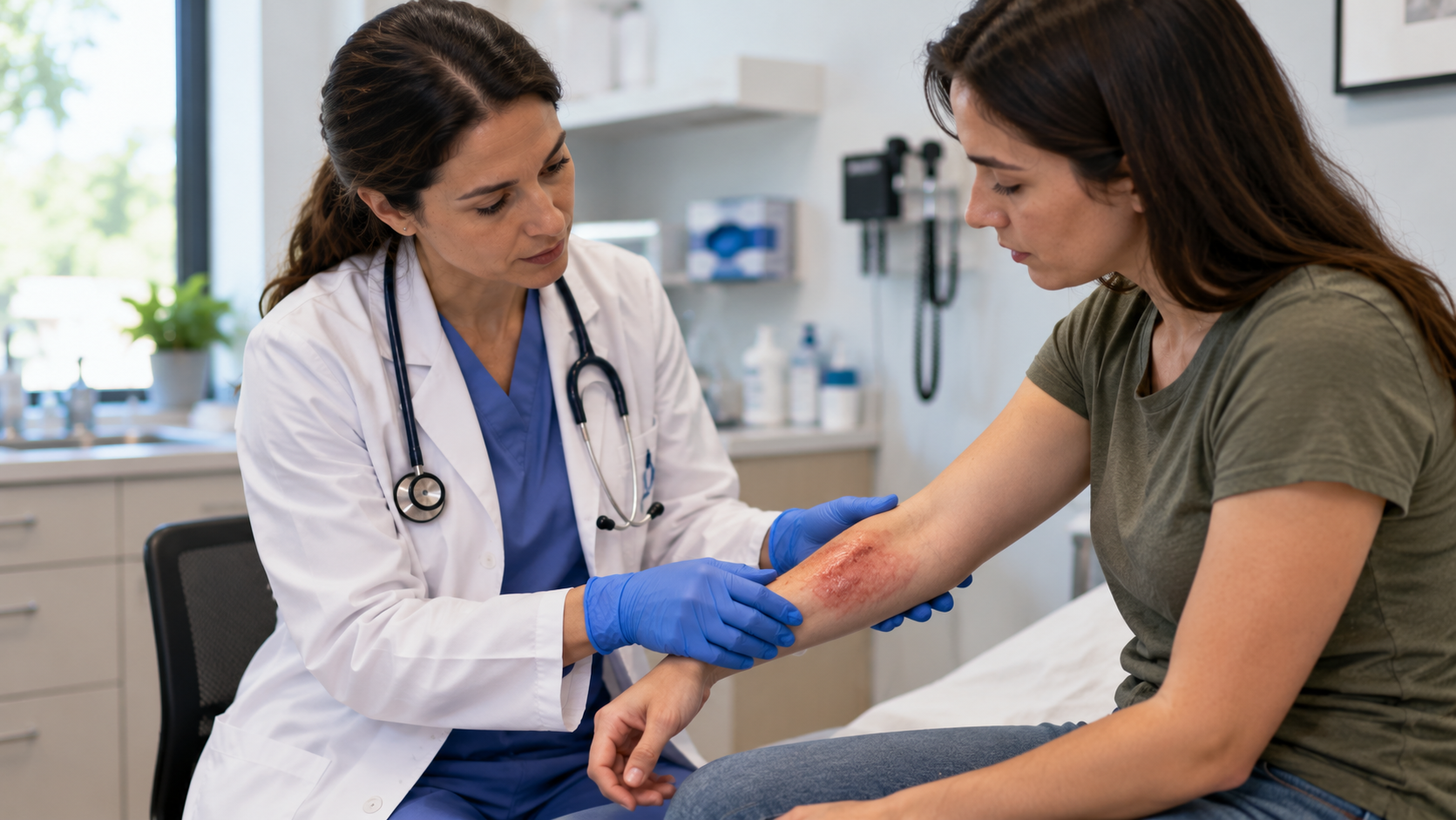
A second-degree burn looks like deep red to dark brown skin that appears moist or shiny, with blisters that may be intact or already broken. Swelling and peeling often follow as the skin heals.
Pain is usually more intense than with a first-degree burn, in part because the nerve endings in the deeper layer are still very much intact.
Not every second-degree burn is the same. A superficial second-degree burn affects the outer layer and the upper part of the layer beneath it, and a primary care visit can evaluate and treat it. A deep second-degree burn reaches further down and needs emergency care.
A provider determines which one you have by checking how deep the damage goes, so a photo online is not a reliable way to decide. Healing usually runs about one to three weeks, depending on size and depth.
A blister is the body's own protective bandage, and trusted medical sources give the same advice: leave it alone.
The fluid underneath cushions the wound and lowers the risk of infection while new skin forms. Popping the blister removes that barrier and gives bacteria an easier way in.
Instead, keep the area clean and loosely covered, and let the blister drain and close on its own. If it breaks by itself, do not peel away the loose skin. Clean the area gently and put on a fresh bandage.
Anyone managing diabetes or another condition that affects healing or immunity should check with a provider before handling a blister on their own.
Most first-degree burns can be cared for at home, and the steps work best when you start right away.
Most first-degree burns heal within one to two weeks, usually without scarring. A burn that is larger than your palm, blisters, or is not improving is a good reason to book minor burn care with a provider.
Watch for redness that spreads beyond the original burn, swelling, warmth, or pain that gets worse instead of better after the first day or two. Other warning signs include:
Pain that has not started improving after about a week is worth a call even without other symptoms.
A burn also breaks the skin's natural barrier. If your last tetanus shot was more than five years ago, contact your provider about a booster.
Blistering is the fastest tell. First-degree burns are usually a home-care situation, while second-degree burns, especially larger ones or ones in sensitive spots, deserve a professional look. Signs of infection mean it is time to call, not wait it out.
Apex Primary Wellness evaluates and treats first-degree and minor second-degree burns at both our Coppell and Frisco locations. Deep, extensive, or third-degree burns belong in the nearest emergency room. To be seen, request an appointment or call (972) 833-7246. Go to the emergency room for deep, charred, white, or leathery burns, large burns, and burns on the face, hands, feet, groin, or major joints. Chemical and electrical burns also need emergency care, as do burns in young children, older adults, or people with weakened immunity. Yes. Swelling, redness, and blistering can increase over the first day or two. Pain that keeps getting worse, spreading redness, or drainage means the burn should be checked. Possibly. Scarring is more likely with larger or more serious burns, and temporary changes in skin tone often fade. A provider can tell you what to expect. Showering is usually fine with lukewarm water and gentle cleaning. Avoid hot water, scrubbing, and soaking. Light exercise is fine if it does not rub or irritate the burn. Pain depends on burn depth and how many nerve endings are affected. Second-degree burns often hurt more because the nerves are inflamed but intact. Very deep burns can hurt less because those nerves are damaged, so a painless burn is not reassuring.Frequently Asked Questions (FAQs)